
Searching Lac Qui Parle County Criminal Dockets
Criminal charges in this county land at the Minnesota District Court, Lac qui Parle County. To pull up a case, go to Minnesota Court Records Online (MCRO) Case Search. Pick the right search tab. A name can pull matches from many counties. Narrow the location to Lac Qui Parle. A full case number works even better. When the online docket seems thin, Court Administration can help. It covers older public files, courthouse access, and certified copies.
One caution. The criminal case category is a filter, nothing more. It does not establish guilt. An open or inactive status does not answer every question about a court record. Before opening Case Details, match the case number, the party role, the case type, and the filing date. The Register of Actions, often called the ROA, then gives you the dated procedural history of the docket.
- Keep the full case number or citation number from a court notice when possible.
- Open MCRO and select Case Search, then select Lac Qui Parle as the county if needed.
- Check the party, case type, and filing date before choosing a result.
- Read Case Details and the ROA for events, hearings, charges, and dispositions.
- Ask Lac Qui Parle County District Court Court Administration for an official copy or an older public record.
Lac Qui Parle Name Search Limits
A name search in MCRO has a real gap. Pending criminal, traffic, and petty-misdemeanor cases without a conviction may not show up in a defendant-name search. In Lac Qui Parle County, that matters. A no-result search is not proof that no court file exists. If a notice gives you a case number, use it. A pending citation can also surface by citation number once it is filed.
The name route can stall. Check the spelling and name order first. Drop any date filter that is too tight, and make sure Lac Qui Parle was selected. Skip the commercial people-search sites; they do not fill the gap. Some public files are older, restricted, or kept off remote display. Court Administration is the lawful local contact for those.
Use the identifier, not an inference. A name omission can reflect a Minnesota access limit, a pending status, or a search mismatch. It does not resolve the case.
Inside a Lac Qui Parle Criminal Docket
MCRO lays out a criminal court record in linked parts. Case Information identifies the matter itself. Party and attorney sections sort out who plays what role. Events usually appear with the most recent first. Separate hearing, charge, warrant, bond, financial, and disposition sections add detail. A document may carry an index number. Even then, no public view button may exist.
| Case number | The court identifier. An official Lac qui Parle filing uses a county component in a format such as 37-CV-18-5; it is an example of numbering, not a criminal-case template. |
|---|---|
| Charges | Original and amended charge entries. A charge is not a conviction. |
| Events | Dated procedural entries, often with an event description and document index number. |
| Hearings | Scheduled or held proceedings, not a final result by themselves. |
| Disposition | A recorded outcome that must be read with the charge and date. |
| Financial information | Fines, fees, payments, credits, or allocations associated with the file. |
For a close look at how access to court records is governed, read Rule 4 of the Minnesota Rules of Public Access to Records of the Judicial Branch. It sets out which judicial branch records the public may see.
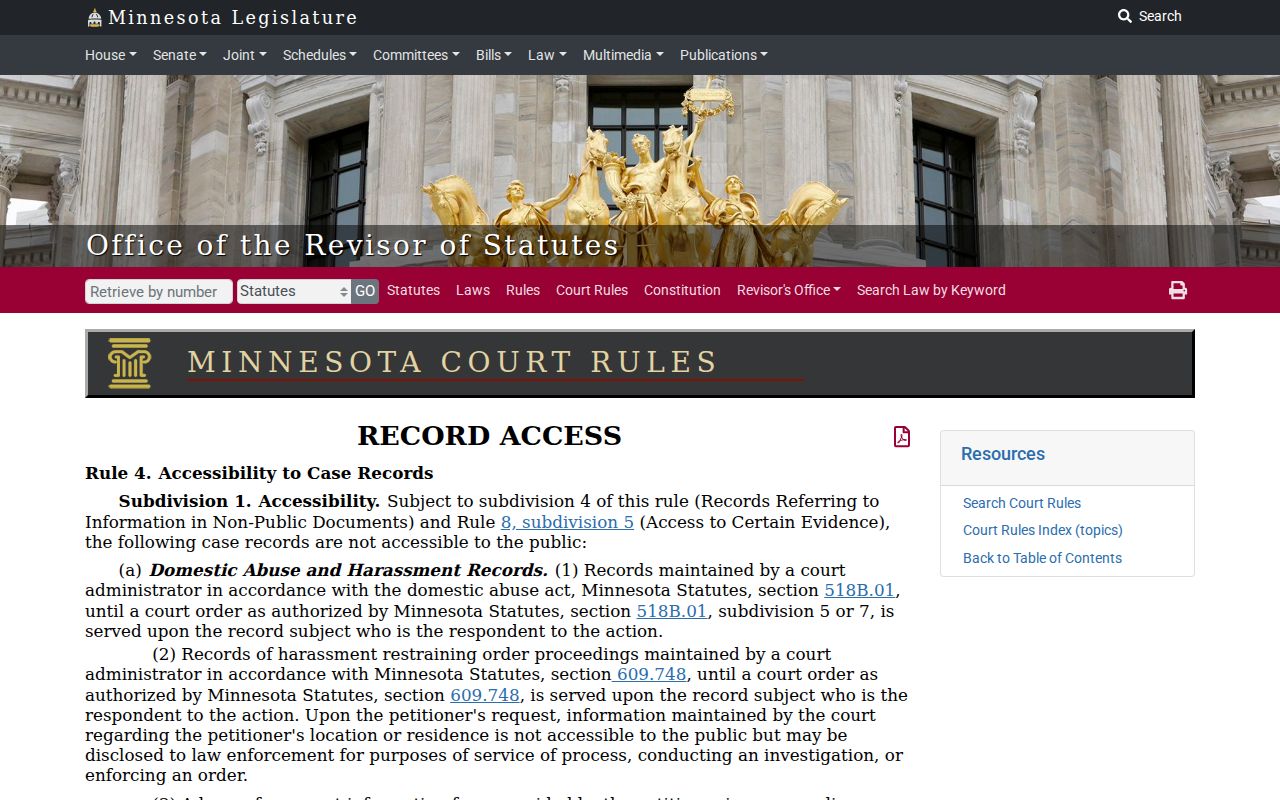
Rule 4 shapes how a docket search works here. It frames a result as an access question, not just a lookup.
Lac Qui Parle Criminal Entry Terms
A criminal docket label can look more final than it really is. Words like a filing or a hearing describe one step. They do not cover the whole case. Read each entry in its proper place. That keeps a charge or a pending condition from being overstated. For that reason, the full MCRO record beats a one-line result every time.
- Amended charge
- An updated charge entry, not an automatic additional conviction.
- Warrant flag
- A signal to read the case detail. It may relate to another case or have its own detailed section.
- Interim conditions
- Conditions pending later action; some details may be restricted.
- Disposition
- A recorded case or charge outcome, which must be read with the date and charge history.
How a Criminal Case Moves
A Lac Qui Parle criminal docket usually runs in a set order. Filing comes first. Then arraignment, pretrial work, a plea or trial, and sentencing where it applies. Any of those stages can generate several entries in the court record. One caution to keep in mind. A listed hearing date is a scheduled step. It is not a promise the case ends that day.
Docket flow: Filing › Arraignment › Pretrial › Plea or Trial › Disposition › Sentencing
Always check a hearing notice and the local calendar before you travel. Calendars shift. The Lac Qui Parle court dates page explains why a calendar can change after you viewed the case record.
Lac Qui Parle Calendar or ROA
Two tools answer two different questions. The weekly public calendar shows what a Lac Qui Parle courtroom has coming up. The register of actions shows what has already been filed in a case file. Neither is complete on its own. The court warns that its calendar is not a list of every matter, since confidential hearings and those closed to remote access never get posted.
Older downloads can also lag behind reality. A hearing that gets changed, reassigned, or scratched may still sit in a stale file on your screen. If the calendar and the ROA disagree, do not guess. Trust the hearing notice and call the Court Administrator. The Lac Qui Parle court page is the official place for calendar and courthouse details.
Courts That Hold Criminal Dockets
Every Lac Qui Parle County criminal docket lives in one place: Minnesota District Court, Lac qui Parle County, part of the Eighth Judicial District. No other trial court keeps its own criminal docket here. That simplifies a docket search. Start with MCRO if your case allows remote access. Then bring courthouse and copy questions to local Court Administration.
Federal charges follow a different track. A federal case never appears in the Minnesota District Court ROA. For a matter filed in U.S. District Court, District of Minnesota, use PACER, the federal courts' own system.
Lac Qui Parle Tri-County Arraignments
A Judicial Branch announcement once described a Tri-County Arraignment setup linking Chippewa, Lac qui Parle, and Yellow Medicine courts. The idea was simple. Fewer long drives, and cases resolved at the first appearance. Arraignments ran on the first and third Mondays. That schedule comes from the announcement.
Treat it as history, not as a live calendar. The announcement records an innovation, and nothing more. For current times and places, check the hearing notice, the weekly calendar, or Court Administration. Only an MCRO entry confirms a hearing today. So does a current Lac qui Parle notice.
Sealed Dockets and Public Access
In Lac Qui Parle County, sealed docket questions run through the Minnesota Rules of Public Access to Records of the Judicial Branch rather than a generic county data-practices request. Rule 8 covers inspection, copying, remote access, and registers. Not everything gets the same reach. Juvenile records sit behind narrower access rules. So do sealed or confidential material, protection matters, and certain criminal filings. Even a public case shell can leave documents or fields unavailable from a distance, so do not assume the docket search shows the whole court record.
Key access rules:
Rule 1 sets the court-record access framework.
Rule 8 covers inspection, copying, registers, and remote-access limits.
Minnesota Statutes § 260B.171 protects juvenile-record confidentiality.
Minnesota Criminal Procedure Rule 25 addresses closure or restrictive criminal-record orders.
Some Lac Qui Parle County files sit outside a normal docket search. Ask Court Administration first. It can tell you which rule or order limits a given record. A paper missing from the public court records is not the same as one a judge sealed. Only an official source settles the difference. The juvenile-record confidentiality statute shows why a routine criminal docket search will not reach every file.
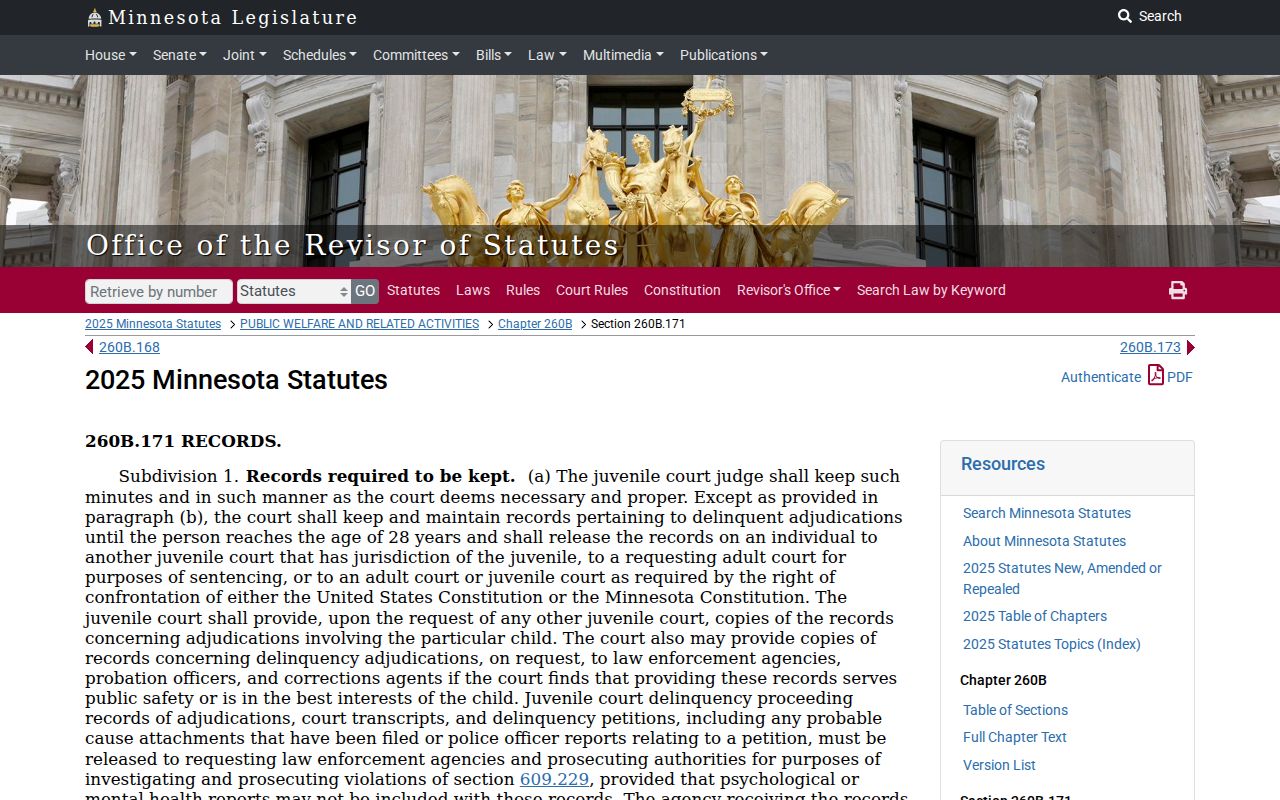
Confidentiality restricts access. It does not license a hunt for private case details through some side channel. When a Lac Qui Parle County criminal docket is closed by court order, Minnesota Criminal Procedure Rule 25 governs the closure and any request to view it.
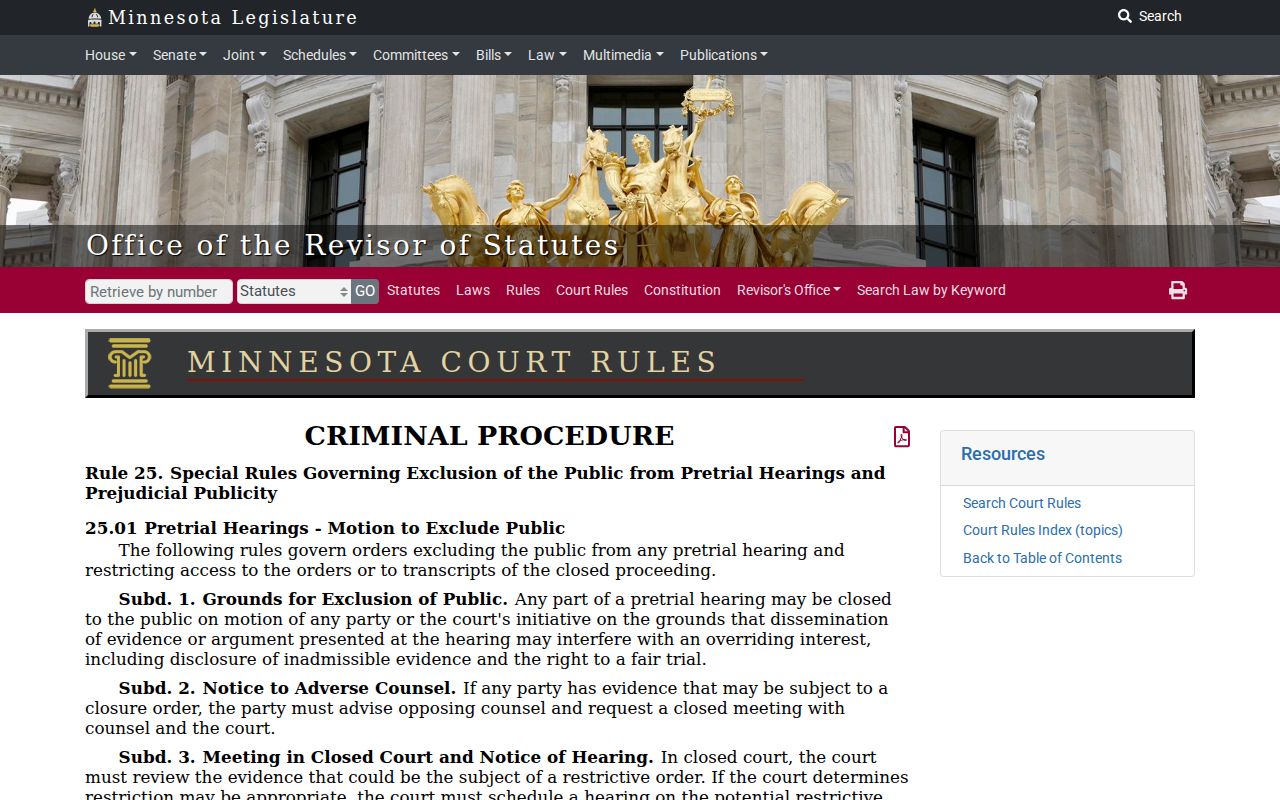
The rule points one way: follow the court's stated process whenever access to a docket is limited.
Lac Qui Parle Criminal Record Copies
Contact Lac Qui Parle County District Court Court Administration. Ask there for an official copy of a public criminal record. Give the case number, the filing or event, its date, and the copy type you want. MCRO can help you spot the ROA entry for the document. Still, a screen display is not a certified copy. If the online link fails, you may need to request the item at the courthouse.
Statewide guidance sets the fees. Plain copies carry no charge, while certified copies cost $14. Exemplified copies cost $14. Certifying a document twice runs $28. Check the exact item and total with Court Administration before you pay.