
Searching Lac Qui Parle County Civil Dockets
Civil filings for the county land in Minnesota District Court, Lac qui Parle County. The fastest online route is MCRO Case Search. You can search it by case number, party name, business, attorney, or any filter the system permits. Narrow the results to Lac Qui Parle when that option appears. A case number beats a name search. Similar names cause mix-ups, and a number takes you straight to the right ROA.
Need the filings themselves? Use MCRO Document Search with the case number in hand. Older files may call for a request to the local Court Administrator. Documents outside remote coverage and restricted records may too. That is a records request, not a sign the file never existed.
- Save the case number from a notice, order, or ROA when it is available.
- Search MCRO and add the Lac Qui Parle county filter if needed.
- Match the parties, category, and filing date before opening Case Details.
- Read the ROA events and use Document Search for eligible public filings.
- Contact Court Administration for inspection, a copy, or help with an older public file.
Lac Qui Parle Civil Document Search
Document Search works as its own MCRO tool. Feed it a case number and it lists public documents the remote-access rules allow out. For major and minor civil cases filed on or after July 1, 2015, coverage runs broad. Sealing, confidentiality, exhibit limits, and similar restrictions still apply. Family and juvenile cases play by different rules.
The official MCRO Document Search screen only pays off once you know the case identifier.
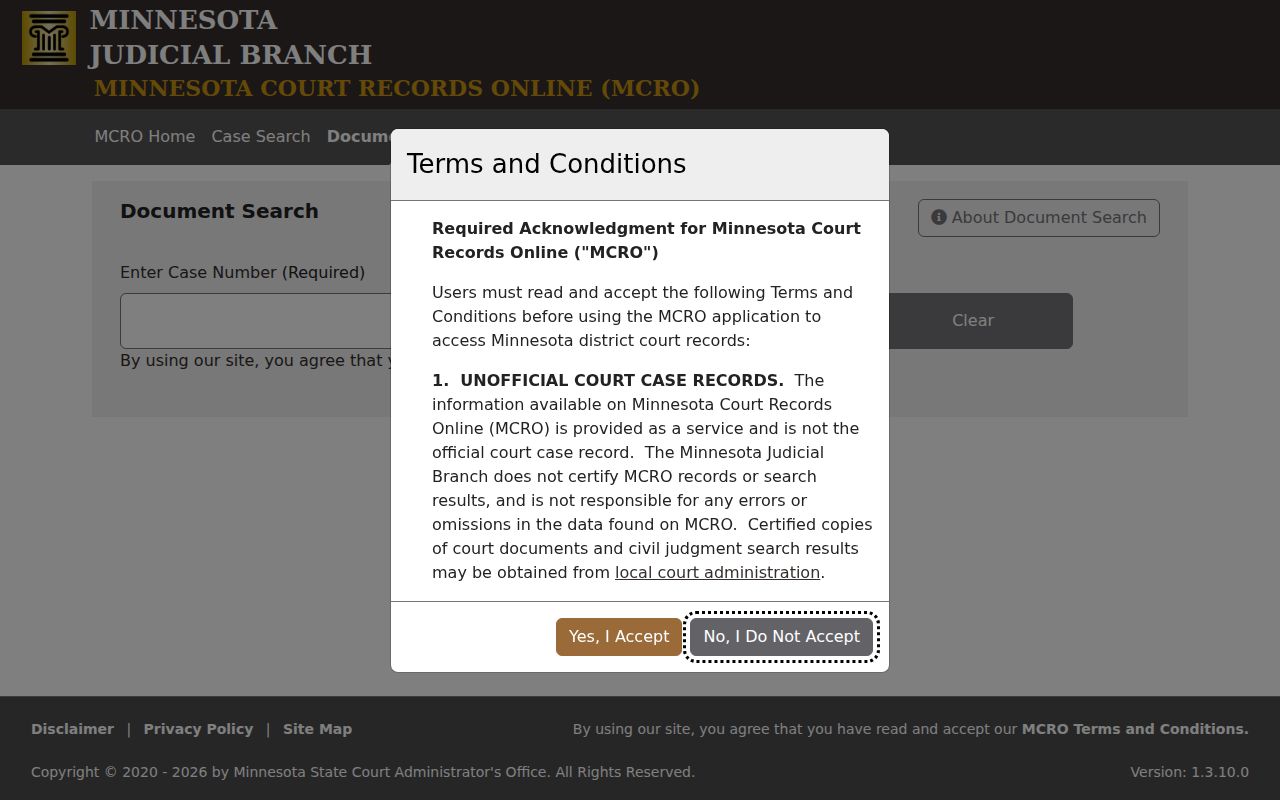
That number-first habit ties a public document to the right Lac Qui Parle civil ROA. A name-only result, by contrast, can land you on the wrong case.
Inside a Lac Qui Parle Civil Docket
Open a civil ROA and the top of the page gives you the case title and number. It also lists the category, date filed, court location, judicial officer, status, parties, and attorneys. Dated events follow. A complaint, answer, motion, order, or hearing may each show up along the way. So may a settlement-related filing, dismissal, judgment, or satisfaction. Each label records what was entered, no more. The docket never decides whether a complaint's allegation is proven.
| Case title and roles | Names the parties and their procedural roles, such as plaintiff or respondent. |
|---|---|
| Date filed | The court filing date, not necessarily an incident or hearing date. |
| Case events | A reverse-chronological record of filings and other court actions. |
| Order or motion | An order is a judicial direction; a motion is a party request. |
| Status | Administrative status, such as active or inactive, not a merits finding. |
| Judgment and satisfaction | Recorded entries that must be read with the full case history. |
Lac Qui Parle Complaint Limits
A complaint starts or advances a civil claim. It is not a finding. An answer records a response, a motion asks the court to act, and an order states what the court decided on that request. Settlement-related entries can appear without the full terms. Keeping these labels straight makes a Lac Qui Parle civil docket read as a procedural record rather than a scoreboard for either side.
A dismissal carries its own context too. Check the final events and any order before turning a short label into the whole story of the dispute.
Civil Case Types on the Docket
MCRO sorts cases into civil, criminal, family, probate, and mental-health categories. Lac Qui Parle County District Court holds original jurisdiction over civil cases. Those are the civil cases filed in the county. The categories do not share remote-document rules, though. Match a search result to its listed category first. Then assume which filings or access channel apply.
| MCRO category | What the category does | Search caution |
|---|---|---|
| Civil | Locates civil case records and ROA information. | Documents can still be restricted or unavailable online. |
| Family | Separates family matters from ordinary civil results. | Remote document display is more limited. |
| Probate or mental health | Uses its own case categories and access rules. | Do not treat a category as a finding or outcome. |
Lac Qui Parle Judgment Search
MCRO Judgment Search covers docketed monetary judgments and satisfaction entries. It returns judgment parties, status or date details, and satisfactions. The tool sits narrower than the civil ROA. So treat it as neither a full case history nor a general financial report. The official judgment-search view shows that separate purpose.
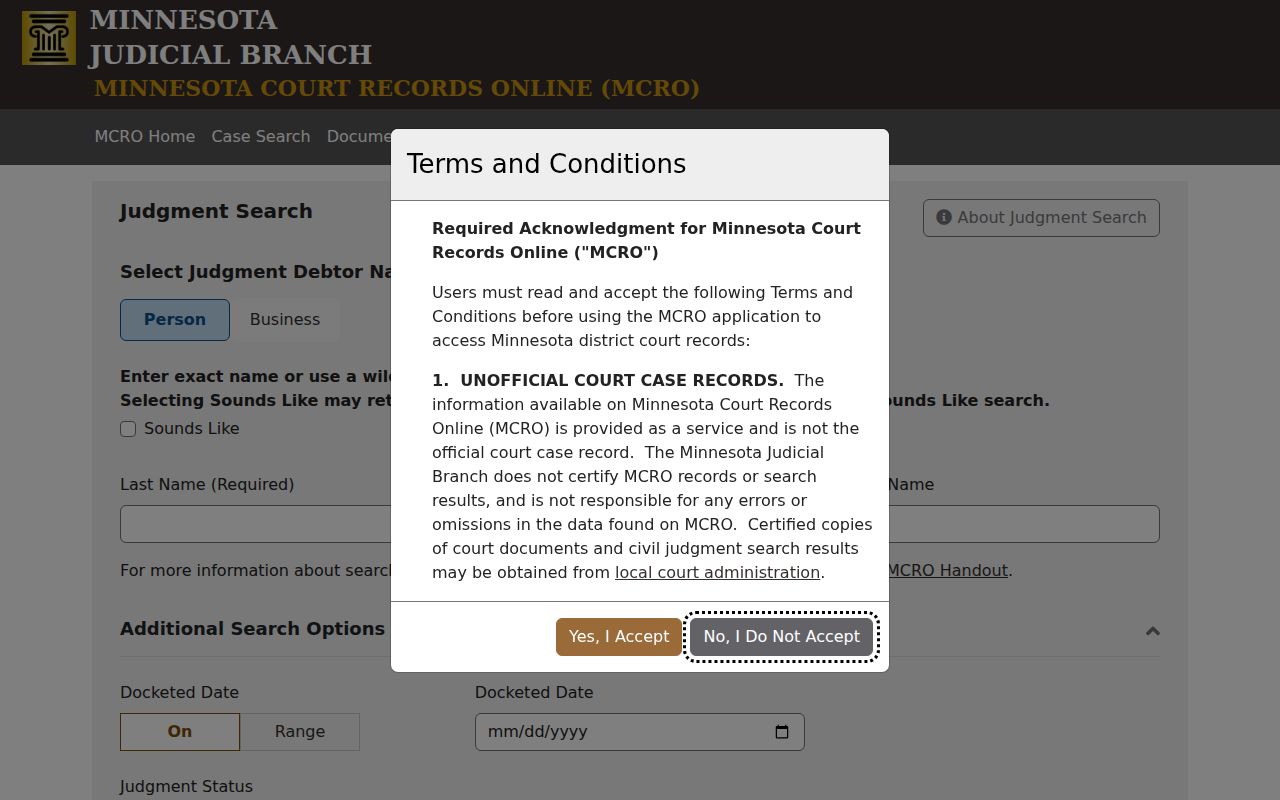
Filings, hearings, or the steps behind a judgment entry send a Lac Qui Parle searcher back to Case Details. For statutory context, Minnesota Statutes § 485.06 governs searching and certifying judgments and liens.
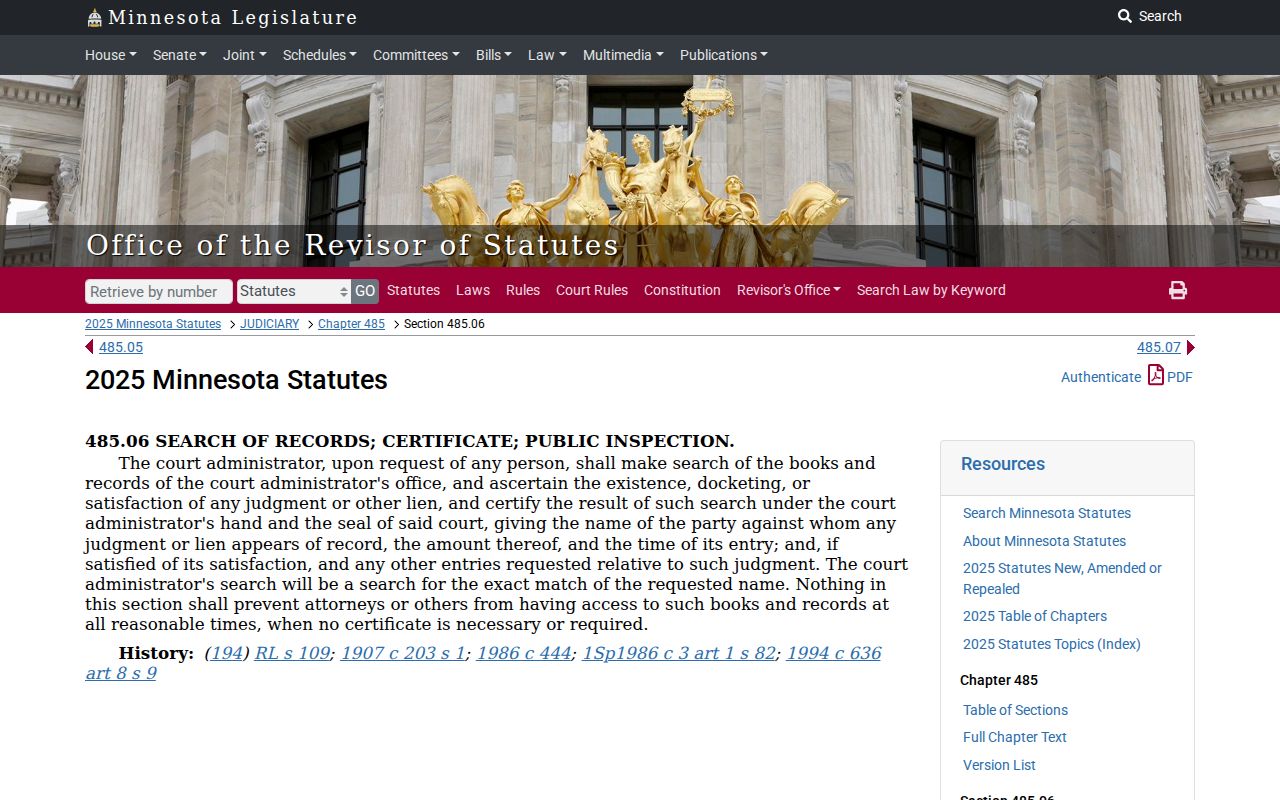
The statute backs a narrow judgment search, not a broad sweep of anyone's finances.
Civil Docket Settings and Hearings
A civil setting marks a proceeding the court has scheduled. Motion, conference, trial, or something else, the ROA shows the hearing entry. Check the current hearing notice and weekly calendar too. Settings get continued, reassigned, or removed.
When a court date is the pressing question, combine MCRO Hearing Search, the local calendar, and Court Administration. An inactive case can still hold a historical judgment or a later enforcement-related entry. A status filter alone is no shortcut to an outcome.
Lac Qui Parle Register Duties
The ROA works as the court's chronological, index-like record, not the full stack of documents behind it. Minnesota Statutes § 485.07 lays out the Court Administrator's register of actions, judgment roll, judgment docket, and indexes. That split explains why an event can show while its document stays offline.
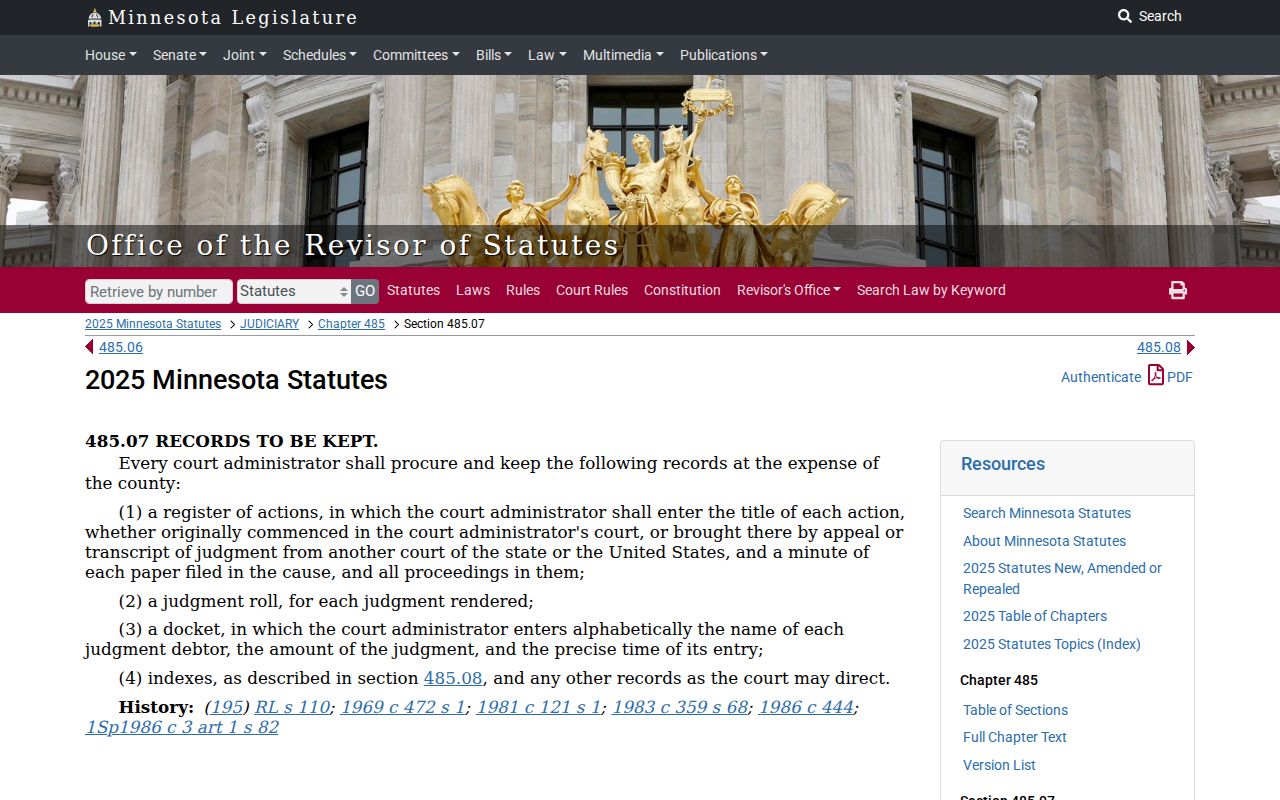
Think of the register as your map when you ask Court Administration for a specific Lac Qui Parle County civil court record.
Civil Docket Access Rules
Minnesota court records run under the Minnesota Rules of Public Access to Records of the Judicial Branch. Rule 8 covers inspection, copying, remote access, registers, and fees. It also separates two things. One is what a person may inspect through the custodian. The other is what a web result displays. The MCRO overview adds a caveat. The service is unofficial and not a certified record. The Rule 8 source helps explain that court-record boundary.
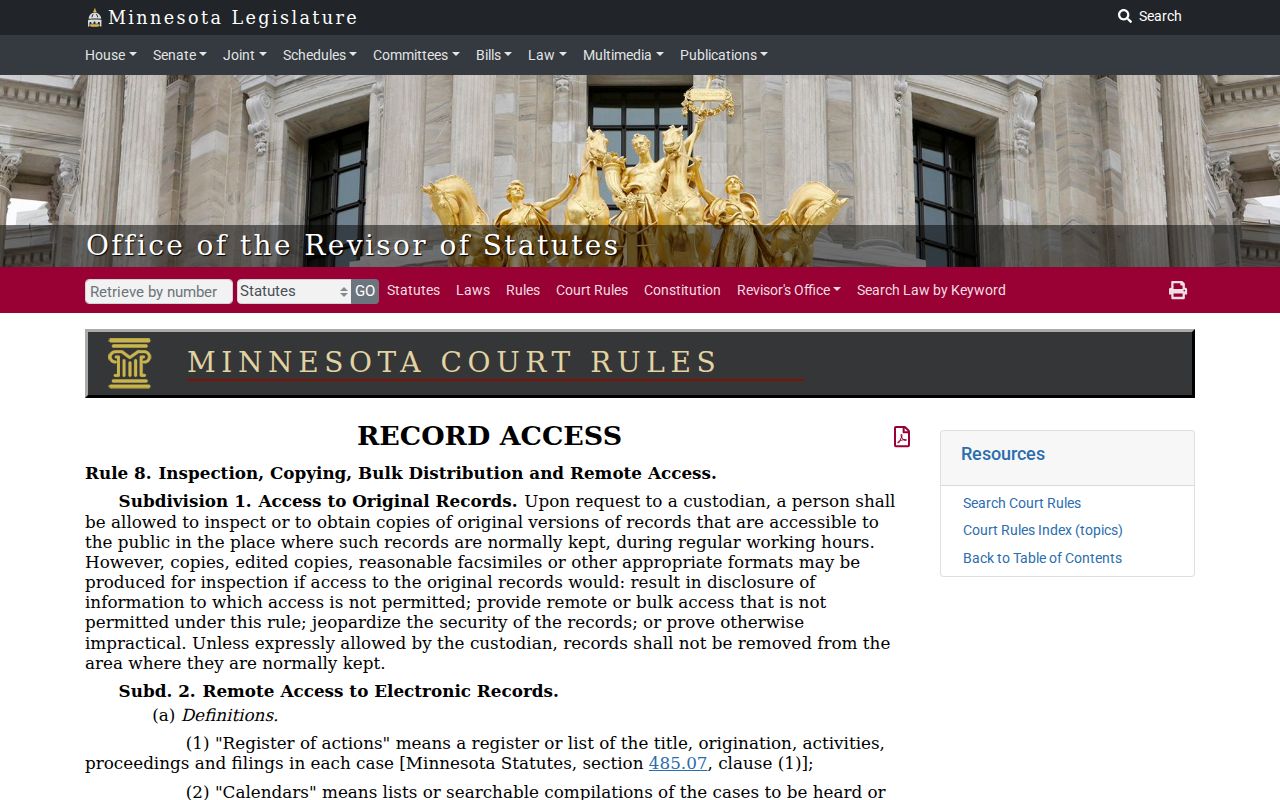
When a public civil document will not open remotely, ask Lac Qui Parle County District Court Court Administration. Courthouse inspection or a copy request may be available.
Lac Qui Parle Older Civil Files
MCRO is not a full archive. Its broader civil coverage starts July 1, 2015. Anything older may sit in a courthouse file. So plan on an inspection or a copy request. Pull the case number, title, date range, and event description from the ROA before you contact Lac Qui Parle County District Court Court Administration. With those details, staff can check whether the file is on site. They can also say whether a public copy can be produced, and in what format.
Be specific about what you need. A plain printout, a certified order, an exemplified record, or a particular docket page each call for a slightly different process. The statewide copy guidance allows a form, a letter, or a local process. The local route applies where a county form is unavailable. Payment runs by credit card or by check or money order payable to District Court Administrator. Confirm the local method before sending any sensitive payment details.
Missing from MCRO? The gap may trace to the date boundary, a record category, a confidentiality rule, a sealed order, or a remote-access restriction. It says nothing about the merits of the Lac Qui Parle civil case.
Lac Qui Parle Civil Record Requests
Lead with the case number. Whether you call or write, the Court Administrator can move faster once you add the filing or event date and the type of document you want. Ask for one specific order, judgment, or docket page. That beats a vague request about a dispute. If the item turns out to be restricted, staff can name the access rule that applies. They will do it without revealing protected details.
Precision helps most when similar names show up in more than one Lac Qui Parle civil record. The case category plus the filing date narrows things when a result points to a related matter. Give staff both and the request stays clean.